Showing posts with label Montmartre. Show all posts

January 01, 2008

2008 has started!

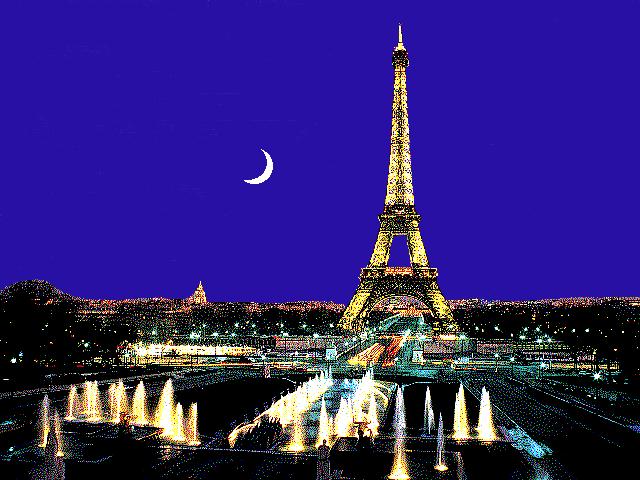
I had a doubt and it was confirmed that there would again this year not be any fireworks around the Tour Eiffel (completely prohibited in Paris for security reasons), so the decision was finally to go to Montmartre - which also is closer to where I live – of course bringing the compulsory champagne bottle.

The crowd is normally concentrated especially to the Champs Elysées – Tour Eiffel area, but Montmartre was also invaded. About all languages were spoken. The weather was OK; however 2007 ended with a few rain drops. (So far it has not been raining in 2008.)

We had the right to see a demonstration with the theme “No to 2008 !”. A nice crowd invaded the place in front of Sacré Coeur with banderoles and music claiming that they wanted to stop the change of the year. They preferred to keep things as they are and avoid the risk of a lousy year. This has been claimed by them now for a couple of years, but so far without success and also the year 2008 did actually arrive at midnight.

So, sorry, I cannot bring you any photos of the Eiffel Tower with fireworks. We could however from far see the special sparkling lightning of the Tower, which now is offered for five minutes every hour, after dark.

I thought I should quickly bring you these photos with a repeated wish for a HAPPY NEW YEAR!
You can fin the originals of these pictures on my photo blog.
This post requested some efforts. I did it before going late to bed... I think I will leave it here for two days, before making a new post!

November 02, 2007

An old cemetery


In July I made a post about the small church behind Sacré Cœur, Saint-Pierre-de-Montmartre, and mentioned the small graveyard connected to the church, the oldest in Paris and called Cimitière du Calvaire. I also mentioned that it’s open for visitors only once a year, November 1st, and I more or less promised to visit it then. I kept my promise. The gate was open.


This small cemetery is on the very top of Montmartre and was once a place where you could find pagan and Roman temples. The few remaining graves are mostly from the beginning of the 19th century and basically you find only local Montmartre people buried here, hardly anybody really widely known. One exception is perhaps L-A de Bougainville (1729-1811), who started the first settlement on the Falkland Islands, led a voyage around the world, fought in the American war of Independence, was a great mathematician… and has got islands, mountains and plants named after him*.

There is another grave that is worth some attention, that of the Debray family: I talked also about this in a previous post, but it may be good to repeat a few details:


The family owned a windmill on top of Montmartre, later to be known as the “Moulin de la Galette” - the only real mill still remaining on Montmartre (difficult to see as on private ground and hidden by trees).

The four Debray sons got killed during a fight with Russians which took place on Montmartre in 1814. (One was cut in pieces, with which the mill wings were “decorated”). They were all buried here and the mother put a small red painted miniature windmill on the top of the grave. The miniature is still there, has lost its colour, but it was the origin of the name “Moulin Rouge”.

Most of the graves are today of course abandoned, are covered with moss (see top picture) and - due to the season - a lot of leaves… In some cases you find a small symbolic flower. The surrounding walls are covered by wild vine.

On the way back home, I passed by the Montmartre vineyard, which I also have posted about, and could not avoid taking some photos of the vine plants (the grapes are gone) and also some other wild vine I found on my way.

*/Actually he got a state funeral and his ashes are now at the Pantheon together with those of many other French heroes, but his heart is still in the cave.

I wish you a nice weekend! Back on Monday!

August 11, 2007

Cité Véron

A few meters from Moulin Rouge, there is a small side street tat I discovered by chance. It’s called Cité Véron.

Different from the street in front, here you can suddenly find a complete calm. I met an old gentleman who wondered what I was doing there; not used to “tourists” with a camera. Consider that that we are so close to Moulin Rouge, Pigalle and all the rest…

Actually I managed to slightly climb a wall and then you can see the roof and the backside of Moulin Rouge. Less captivating than the front!

The very kind gentleman told me that some personalities used to live here, names which say a lot to a Frenchman and maybe some others: Jacques Prévert and Boris Vian were neighbours and shared the same balcony.

Somebody seems to have discovered that under some old painting, there was an old manifest and then left it there without repainting on it (sincere thanks). I have difficulties to read it in complete, but it’s obviously a quite revolutionary text. The man portrayed below seems to have some kind of Marx beard, but it’s not him. ??

This is what I could read. Someone ready to fill in?

“NOUS VOUL…révolution universelle… culturelle…politique…. fondé sur…nation et sur le…d’autorité…pour les travailleurs, liberté pour tous les oppr… inateurs et exploiteurs de toute sorte… tous les états…apelles politiques ou re…Il s’agit de détruire… stitutions et les lois…policières…ersitaires, économ…les hommes délivrés du trav…leur liberté. »
You can find the original pictures on my photoblog.

July 02, 2007

Saint-Pierre-de-Montmartre

Most of you have probably visited Montmartre one day and of course then also Sacré-Coeur. Not so many of you may have visited the church just behind, Saint-Pierre-de-Montmartre.


It is competing with Saint-Germain-des-Prés to be the oldest of the remaining Paris churches. It was built in the beginning of the 12th century as part of monastery and was consecrated by the then pope in person in 1147 and in presence of, among others, Saint-Bernard.

The French queen Adèle (Alix) de Savoie retired as abbess, died in 1154 and her tombstone is still to be seen in the church.

It seems also to be proven that the Society (Company) of Jesus was founded here in 1534 by Ignatius of Loyola and some of his fellow students at the University of Paris.

The church was more or less in ruins for a long time, but has been restored as from the latter part of the 19th century. In the meantime it had even been “crowned” by a telegraph tower. Many parts (windows, altars etc.) have been replaced, but the essential construction is a clear example of late Roman early Gothic style. There are obviously even some leftovers from the Roman and Merovingian temples that previously stood on the hill.

Just behind the church (behind a closed bronze door) is the oldest still existing Paris graveyard. It is not used any more and is opened for visitors only one day each year (November 1)*. This is really the top of Montmartre and was the place for pagan and Roman temples. The few remaining graves date mainly from the beginning of the 19th century.

*/ I managed to squeeze one hand and my camera through the narrow openings of the door to take some snapshots, but I plan to go back November 1.
You can find the original photos from the above patchworks on my other blog "Peter - photos".

June 04, 2007

Bridge over...

There was obviously a traffic problem in Paris to solve by the end of the 19th century. They had to decide to build a bridge, over the Montmartre cemetery. As can be seen from my photo, the bridge was constructed in 1888.

It’s interesting to see how they have managed to adjust the bridge in order to avoid destroying any of the existing tombs.
I have put the photos from this patchwork on my other blog, "Peter - photos".

June 01, 2007

Lapin Agile


The immediate neighbour to the vineyard (see yesterday) is a small cabaret, called Lapin Agile. (I could tell the story behind the name, but that would take too much room here.)

The small building must have been there for a few centuries and it was obviously always some kind of place for eating and drinking. Around 1900 a personality with the nickname “Frédé” gave new life to it and it became a meeting place for all kinds of artists. “Frédé” played the guitar and the violoncello, sang and got the guests to actively participate. Already or later famous artists were regular guests, like Appolinaire, Marcel Proust and painters like Renoir, Utrillo, Braque, Modigliano, Picasso (always the same), but also Fernand Léger and Maurice Vlaminck.

Around 1920 “Frédé’s son took over.

A lot of musicians and singers have performed here in the beginning of their career, surprisingly also including some classic music performers like Alexandre Lagoya, Ida Presti, Siatoslav Richter, Leontyne Price

The guestbook is also fantastic. There are drawings, poems, signatures by all the famous artists who have worked or visited the place, but there have also been some occasional visitors like Charlie Chaplin, Gloria Swanson, Ernest Hemmingway, Edward G. Robinson, Robert Mitchum, Laurence Olivier, Vivien Leigh, Paul Newman, Joanne Woodward, Laurence Bacall, Henry Miller and… Eleanor Roosevelt, The Empress of Japan… (I neglect here the local French celebrities.)
Steve Martin made a play called “Picasso at the Lapin Agile”.

The life of the cabaret goes on. What will become of today’s performers?

May 31, 2007

Le Clos de Montmartre

Many of you may already know about this, but anyhow...

A few centuries ago, there used to be a lot of vineyards in and around Paris and the wine was supposed to be of good quality – at least for the taste of those days. Then, as more space was needed for housing and as transports from other areas became easier, most of the vineyards disappeared. There are anyhow a few left; four small ones in Paris and some other small ones in the suburbs.

The most famous Paris vineyard can be found at Montmartre. Some locals, led by a famous illustrator and cartoonist, Fransique Poulbot, took the initiative to occupy some space and stop the construction of new apartment houses. Instead vine planting was made and in 1933 the “Clos de Montmartre” was inaugurated by the President of the Republic (!!!), Albert Lebrun, a great wine lover.

There are some 1900 plants, generally producing some 1700 50 cl bottles. It’s not (yet) the best red wine you can find, but it’s said to get better and better. The vineyard is kept by the Paris municipality.

There is a much visited celebration taking place each year in October at the end of the harvesting. The wine is sold during a yearly auction – you cannot just go and find it in a shop - and the benefits go to different local social welfare actions. One of these small 50 cl bottles would normally today cost some 50€ (65-70 US$, 30-35 UK£).

May 29, 2007

Le Moulin de la Galette

I will now and then come back to my Montmartre visit the other day. (By the way, I have created a second blog, “Peter – photos, where I for the moment have put the original photos which were part of my patchwork from Montmartre and Place des Abbesses.)

Today a few words about “Le Moulin de la Galette”:

Originally there were a great number of windmills on Montmartre (maybe thirty), but "Le Moulin de la Galette" is now the only remaining one. Originally it was called “Le Blute Fin” (The Fine Grounded Flour). It belonged to a miller family with four sons, who were all killed during fights between Russians and local defenders which took place on Montmartre in 1814 (Napoleon…). The eldest brother was killed the last, at the family windmill, but had first managed to give a fatal rifle blow killing the Russian commander. He was cut into pieces by the Russians and they used the pieces to “decorate” the mill wings. The four brothers were buried in the small local cemetery and their mother put a red painted miniature windmill on top of the grave. You can still visit this small cemetery, but only once a year (November 1). The grave is still there, but the miniature windmill has lost its colour. Anyhow, this red painted miniature mill became famous and later gave the name to the worldwide known “Moulin Rouge” (where no flour has ever been grounded).

The son of the eldest brother participated in the fight where his father was killed. He was seriously wounded and decided to change activity. He transformed the mill to a “guinguette” (small place for eating and dancing) and changed the name to “Le Moulin de la Galette” (Galette = thin pancake).

The “guinguette” was much visited and painted by some famous artists, like Corot, Renoir, van Gogh, Toulouse-Lautrec, van Dongen, Picasso, Utrillo...

There is today a restaurant at Montmartre with a small windmill on top of it. The restaurant is called “Le Moulin de la Galette”, and many would think that this is the real one.

However, the real windmill with this name is slightly behind this restaurant and can hardly be seen; the close access to the mill is today not possible, but I have some distant photos, where you can imagine it behind the leaves.

Correction: This info is slightly false. Please see a hopefully improved version on my post of March 25, 2009, on my new blog, Peter's Paris. (Click above undr "HERE".)

I made a comparison between what Utrillo painted and what I could see. Not too much of a difference, except that the trees have grown. I should try again in December, when the leaves are not there any more.

May 26, 2007

Place des Abbesses

Further referring to the Montmartre patchwork the other day, here are some more details about the Place des Abbesses, where the “I love you”-wall can be found. I think it is one of the most beautiful places in Paris. It has a lot of charm and is not invaded by more or less gifted ”tourist painters” and other commercial activities. It’s visited, but normally not included as a “must” in a normal Montmartre tourist tour.

Adjacent to the central place you have a small park (Square Jehan-Rictus) with the “I love you”-wall. On the place, surrounded by bars, you can find a carousel, a Wallace fountain and one of Paris’ nicest metro entrances. Crossing the street, you will find the church Saint-Jean-l’Evangeliste.

There is some more information below, between the photos.


The church, Saint-Jean-l’Evangeliste, is rather recent, inaugurated in 1904. The architect, Anatole de Baudot (1834-1915), wanted to create a simpler kind of church. The ironwork and the concrete used for the building is partly visible and the, for that époque, innovative design can be said to be related to the “modern-style”.

The modern-style” (Art Nouveau, Tiffany, Liberty, Modernismo…) is more clearly represented by the metro entrance, designed by one of its innovators, Hector Guimard (1867-1942). You can find several of his metro entrances in Paris, but this is clearly one of the more spectacular ones, with a glass roof. On the top picture, you can (on the lower part) discover how Hector has incorporated an M for metro in his design. (This entrance has actually been brought here from another metro station in order to have it saved.)

May 25, 2007

The wall of "I love yous"


There are a few photos in my Montmartre patchwork from yesterday to which I would like to come back. I started to prepare something on what I had not seen before, a wall covered with the text “I love you” in some 311 languages and dialects.

When looking on Google for what this really is, one of the references I found was from Olivier’s blog in November last year! I decided to go for it anyhow; some of you may not have seen it and for me it was still new; I started blogging only in March this year, so I had missed Olivier’s information.


This wall has white text on blue, enamelled lava tiles. There are some red spots, supposed to be broken hearts. It was created only a few years ago by two contemporary artists, Frédéric Baron and Claire Kitoa.


Of course not quite all languages and dialects are represented, but the 311 chosen include also Dzongkha, Kirgiz, Corsican…


I hope you can get a good view of it here, but if you want to visit it really, you have to go to Place des Abbesses, Square Jehan Rictus. This little park used to be the place of the Montmartre town hall, when Montmartre was not yet part of Paris (incorporated in 1860). The building was destroyed at the end of the 19th century. By the way, one more of my favourite Wallace fountains (see May 10 and 12) - the junior model - can be seen on my photo.


You could possibly try to look for your own language, but I already extracted a few which I managed to spot. (I hope I’m right with the Chinese and the Indian.)

May 24, 2007

Montmartre

First I thought I should make it easy for me today and just ask if you would recognise these two Paris landmarks.
Then, I understood that it would be too easy. So, here is instead a large package of photos from my Montmartre promenade yesterday – easy walking distance from where I live but of course involving a bit of climbing. I tried to make a mixture of normal tourist photos and some views which are not so common. I will probably come back more in detail and comment some of them, but I could not avoid immediately making a special reference to our beloved Amélie (see below).


Here you have the photos of the café where Amélie Poulain was working and the grocery shop where she made her shopping. (I guess you ALL saw the film!)