February 05, 2008

Pont de Mirabeau


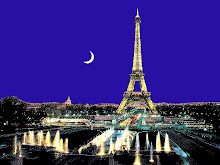
From the Pont de Mirabeau, the Mirabeau Bridge, you have a splendid, somewhat distant, view of the Eiffel Tower and the (copy of) the Statue of Liberty (see previous posts).

Le Pont de Mirabeau was named after one of the greatest personalities during the French Revolution, the Comte de Mirabeau (1749-91). The bridge is also clearly linked to another name, the poet Guillaume Appolinaire (1880-1918), who wrote a famous poem, “Sous le Pont Mirabeau coule la Seine…“ (“Under the Mirabeau Bridge runs the Seine…”). The bridge has often been referred to also by other French artists and is somehow a very “romantic bridge”.

The bridge was constructed 1893-96. It links the 16th and the 15th arrdts. It’s a bit further down the Seine than where most tourists go, but it’s one of the most beautiful bridges in Paris. The bridge is decorated with four colossal bronze sculptures.

On what is called the link side of the river (“Rive Gauche”), you have a few of the modest skyscrapers which were allowed to be built in Paris (15th arrdt.). On the “Rive Gauche” side of the bridge, you can find the old station “Javel” which was built for the Exposition Universelle in 1889, to which the Eiffel Tower was erected as an entrance arch. From this station you can still take a local train towards the Eiffel Tower - and further along the Seine – or, in the other direction, towards Versailles. Some of these pictures can also be seen on my photo blog.

February 04, 2008

Ile Saint Louis (3)


Let’s finish the tour of Ile Saint Louis by a visit to the narrow main street, rue Saint Louis en l’Ile. This is where we find the church with the same name, but also a multitude of shops, restaurants, bars.

Several of the commentators on the previous posts on Ile Saint Louis have immediately referred to “Berthillon”, Paris’ most famous house for ice-cream and sorbets. This manufacturer and retailer has its primary store here, but you can also find their products in almost all the bars along the street – and elsewhere. Their products are said to be completely natural; milk, sugar, cream, eggs and different flavours.

Among the restaurants, there are several good ones, but also some tourist attractions, like “Nos Ancêtres les Gaulois”, where you eat and drink as much as you like for a fixed price. The menu is supposed to offer more or less Asterix – Obélix type of dishes.


There is also what must be considered as a top restaurant, “L’Orangerie”. It used to belong to a popular French actor (J-C Brialy), but was in 2006 taken over by Michel del Burgo, who was chef at the three macaroons (stars) restaurant “Le Taillevent”.

There are certainly other quite good restaurants (“L’Ilot Vache”, “Le Relais de l’Ile”, “Les Gourmands de l’Ile”…), but unfortunately I haven’t tried them all. Maybe some of the readers have some recommendations?

You can also find a multitude of boutiques and a few surviving old-model grocery shops, butchers etc… (see top picture).
Please not that I added two extra posts today – see below!

Bonus 1

We made a family walk yesterday. The weather was cold, but the spring tried to show some signs.

Bonus 2

On the way home from our Sunday walk, I passed under the Eiffel Tower.

February 01, 2008

Ile Saint Louis (2)

Next episode on Ile Saint Louis will be to visit the central street of the island, but today let’s make a quick visit to the church “Saint-Louis-en-l’Ile”. It replaced a chapel where (the later saint) Vincent de Paul was active.

What is a bit special is that the church is completely squeezed in between other buildings on the island’s main street and not so clearly visible from the outside, except for the tower and the clock on the wall.

The construction of the church started in 1664 and was basically finished nine years later, but several modifications took place and the church was officially inaugurated only in 1726. As most other churches, this one suffered also from the Revolution and it was restored during the 19th century. This is a typical Jesuit type of church in baroque style.
The interior of the organ was also destroyed during the Revolution, but it’s now (2004) completely rebuilt in a combination of old material and modern technology. It is said to be an excellent one. The church is actually known for a summer music festival and is also in general frequently used for concerts. The doors are often closed for repetitions.

A few of these pictures can also be seen on my photo blog.

Have a nice weekend! See you Monday with the last Ile Saint Louis episode.

January 31, 2008

Ile Saint Louis (Post # 300)

Ile Saint Louis which is just east of Ile de la Cité is a combination of what previously were two smaller islands and it started to be really inhabited only in the 17th century. I have again made a comparison of what the island looked like around 1730 and today. Actually, still today most of the buildings are from the 17th century including a beautiful baroque church. The narrow central street is full of restaurants and shops. As there is quite a lot to see and visit, I will make three different posts on this island, today rather making the tour of the exterior streets, river banks and small parks at the extreme ends. To give you a more clear idea of the surrounding geography I made this additional plan. Close neighbours are, in addition to Notre Dame, one of the most famous Paris restaurants (Tour d’Argent), the Arab World Institute (clearly worth a visit), la Bastille.

Coming from Ile de la Cité and Notre Dame, you will use a pedestrian bridge, mostly occupied by some street musicians.

On the island there are a lot of remarkable buildings including, on the eastern corner, the Hôtel Lambert with a lot of famous successive owners (today a Rothschild). During the 19th century it belonged to a Polish prince and was some kind of centre for Polish emigrants. Chopin was a frequent guest and most of his “polonaises” were created for the annual “grands bals” held here. The “hôtel” was designed by Louis Le Veau (or Le Vau) who during some 25 years was Louis XIV’s chief architect and contributed at Versailles, Vaux-le-Vicomte, Vincennes, Louvre, Institut de France (French Academy)…Another building designed by Le Veau is the Hôtel de Lauzun (or Lausun, front gate closed), now belonging to and restored by the City of Paris. You can here see the gate together with some others. The island has had a lot of illustrious occupants, in the beginning mostly French nobility, but later also Marie Curie, Baudelaire, Daumier, Blum, Chagall, Pompidou… and still has (no names here).

One of them was Camille Claudel, who lived and worked here during 14 years after she had left Rodin and until 1913 when she was forced to leave for a mental institution where she spent her last 30 years. The gate was closed, but a nice lady let me in to take a photo also from the court yard. The apartment cannot be visited; today occupied by a well known personality (no name).

Some of these pictures can also be found on my photo blog.

This is my 300th post (on this blog) in 315 days - my first post was made March 22nd last year.

January 30, 2008

La Conciergerie

Not so much spectacular to show in images from La Conciergerie – part of the Palais de Justice - but the place is very much linked to French history.

The name of the building is related to the French word for a caretaker or door-keeper (concierge), still often found in French apartment buildings, mostly a lady living on the ground floor and checking if you have the right to enter or not. In this case, there was certainly a need for a door-keeper as this became the Paris’ first and most famous prison.

This part of the present Palais de Justice was built as a fortress 1284-1314. When by the end of the 14th century the kings moved out from was then the Royal Palace (Palais de la Cité) to the palaces of the Louvre, Vincennes and others, this part became the seat for the Parliament (Parlement de Paris), the judicial power and also a prison.

Totally you can see four towers, the first one the square Clock Tower and then the Caesar Tower, the Silver Tower (where the royal jewelry may have been kept) and the “Bon Bec” (= medieval slang for tattler) Tower, where the confessions were obtained.

In the basement is a gigantic room which originally served as the Palace refectory, but during the revolution housed the male prisoners (with an extra wooden deck to make place). Some prisoners could be better lodged, against payment.

La Conciergerie is of course especially known for its role during the Revolution, when thousands of prisoners were kept here, usually not for long. Most of them were condemned quite quickly and then brought to the guillotine. Famous prisoners here were e.g. a lot of members of the royal and noble families, but also revolutionary like Danton and Robespierre … and of course Marie-Antoinette.

The place of her cell was transformed to a chapel, known as the Expiatory Chapel a few decades later, when the royalty came back to power.

The floor and the window are still there. The window leads to the Women’s Courtyard.


Marie-Antoinette’s cell has been reconstituted just behind the wall of the chapel, but here everything is false.

You can find the list of the 2780 people who were condemned to death and guillotined during the Revolution. By a coincidence, the name of the (former) King and Queen are close to each other on this alphabetic list. La Conciergie served as prison until 1914.

January 29, 2008

Sainte Chapelle

In order to visit the Sainte Chapelle (Holy Chapel), you have first to enter the Palais de Justice and go through a security control, similar to that of today’s airports. It’s worth it!

This is in my mind one of the world’s most beautiful buildings (inside) and somehow an extreme example of gothic architecture. It was constructed in the middle of the 13th century during the reign of Louis IX, who became Saint Louis due to a number of crusades and other by the Church well appreciated actions. The chapel was built to house a number of relics, like Christ’s Crown of Thorns, a piece of the Cross… The king paid four or five times more for the relics than it cost to build the chapel.

The chapel is built in two levels, both fabulously decorated. It is difficult to get a good total view as the chapel is squeezed in between other buildings.
The lower part was the parish church for the inhabitants of the Royal Palace. (The top picture is from this lower part.)
The upper part, then with direct access from the Palace, was for the King and whoever he invited and that’s where the relics were saved.
Of course the 1789 revolution had some unfortunate consequences for the chapel as for most religious buildings. The relics disappeared and the chapel was partly dilapidated. However, during the 19th century the stained glass windows which had been dismantled were restored (most of them have the original glass), the different statues which had been saved were put back and the whole decoration was restored as close as possible to what was thought to be the original one.

I would advise you to visit the place a sunny day to see the full splendour of the windows (As you can see from the outside photos, the sky was nicely blue the day I went). An alternative is to go an evening when concerts often are given.

As usual you can find the original pictures on my photo blog.
I got a "Best Friend" award from Noushy Syah yesterday! Sincere thanks Noushy!

January 28, 2008

Palais de Justice

We have already visited the Pont Neuf and Place Dauphine, which are on the extreme western end of Ile de la Cité. Just behind Place Dauphine you will find the Palais de Justice. (I guess that all these names need no translation.)

Ile de la Cité was the original centre of Paris and where you now find the Palais de Justice were previously situated the seat of the government during the Roman times, the Royal Palace during the medieval times and then later the “Parlement de Paris” (developed out of the previous council of the Kings), a prison and a Hall of Justice. From those times remain not so much; most of the present Palais has been built during the 17th and 18th century, but there are some nice remains including the Conciergerie (prison) with its old towers and the Sainte Chapelle (Royal church). I will come back to these in some following posts.

I have made a comparison between Ile de la Cité in 1552 and today (Google). The scale on the old map is perhaps not perfect, but it gives us an image of what the island looked like those days. Pont Neuf and Place Dauphine were created only some 50 years after this map.First some general views of the Palais - which today is the seat of local and national courts of justice including the highest court of appeal. It covers some 200 thousand sq.m. (50 acres), has 24 km (15 miles) of corridors, 7000 doors… It houses some 4000 magistrates and civil servants, not mentioning the thousands of more or less voluntary daily visitors.The clock you see in the top is from 1585 (it works) and it replaces what was the oldest public clock in Paris which was put there some 200 years before. You find it on the square tower called “Tour d’Horloge”, the Clock Tower, which was built as watch tower.Tomorrow, we will visit the fabulous Sainte Chapelle.

As usual, you can find some of these pictures on my photo blog.

January 25, 2008

Grands Boulevards (3)

Time for the last part of the Grand Boulevards, including the Boulevards des Italiens, des Capucines and de la Madeleine. (See maps on previous posts.)

This boulevard changed name several times, but the present name comes from the “Opéra Italienne”, now called the “Opéra Comique”, a theatre created at the end of the 18th century and mostly used for lighter type of operas, operettas… From the boulevard you only see the back side of this theatre.

In the upper part of Boulevard des Italiens you find some bank buildings, including the headquarters of Crédit Lyonnais (LCL). The building, enormous when it was built at the end of the 19th century, was seriously damaged by fire in 1996, but restored. Among other things you can admire the clock on the façade.Another building here, today also occupied by a bank, called Maison Dorée (the Golden Building) housed during the second half of the 18th century the most exclusive and expensive Paris restaurant, visited by kings and all kinds of prominent personalities. Here was also held the last impressionist exposition in 1886 (for the first one see further down) and the first “art nouveau” exhibition in 1895.

At the end of Boulevard des Italiens and the beginning of Boulevard des Capucines, you will find a concentration of cinemas and restaurants, including one of the typical Paris brassieres which remain open all year, 7/7, 24/24, Le Grand Café des Capucines, opened in 1875. Do you feel for some nice oysters at 5 p.m. or 5 a.m.?To continue on Boulevard des Capucines we will first cross the Place de L’Opéra with a view of Opéra Garnier to the right and Rue de la Paix and Place Vendôme to the left. We will find the Grand Hôtel with Café de la Paix.Further down Boulevard Boulevard Capucines, at no. 14, downstairs, in 1895, the Lumière brothers made their first paying audience to what can be considered as the debut of the cinema and shortly later Roentgen demonstrated his invention of X-rays.


At no. 35, in 1874, Renoir, Pissarro, Sisley, Cézanne, Morisot, Degas, Monet… organised their own exhibition with few visitors. The Monet painting “Impressions…” gave the name to the movement “Impressionism”.

Close to here you have also the oldest, still existing, and most famous music hall in Paris, Olympia, opened in 1889 by a Mr. Oller, who also created Moulin Rouge. Among the performers here: Edith Piaf, Jacques Brel, Charles Aznavour, Gilbert Bécaud, Amalia Rodrigues, Céline Dion, Judy Garland, Led Zeppelin, Petula Clark, Luciano Pavarotti, Dionne Warwick, The Beatles, The Rolling Stones, The Jackson 5…

We have now reached the end of the Grands Boulevards and, after a short walk on Boulevard de la Madeleine, we will find the Madeleine Church with a view of Rue Royale and Place de la Concorde.
The impressionists made several paintings around the boulevards. Here you can see a Renoir from Boulevard des Italiens and a Monet from Boulevard des Capucines.

Happy walk during the weekend! See you Monday!

As usual, you will find some of these pictures on my photo blog.